.png)
Email Now: hello@quillmarketing.com

Email Now: hello@quillmarketing.com
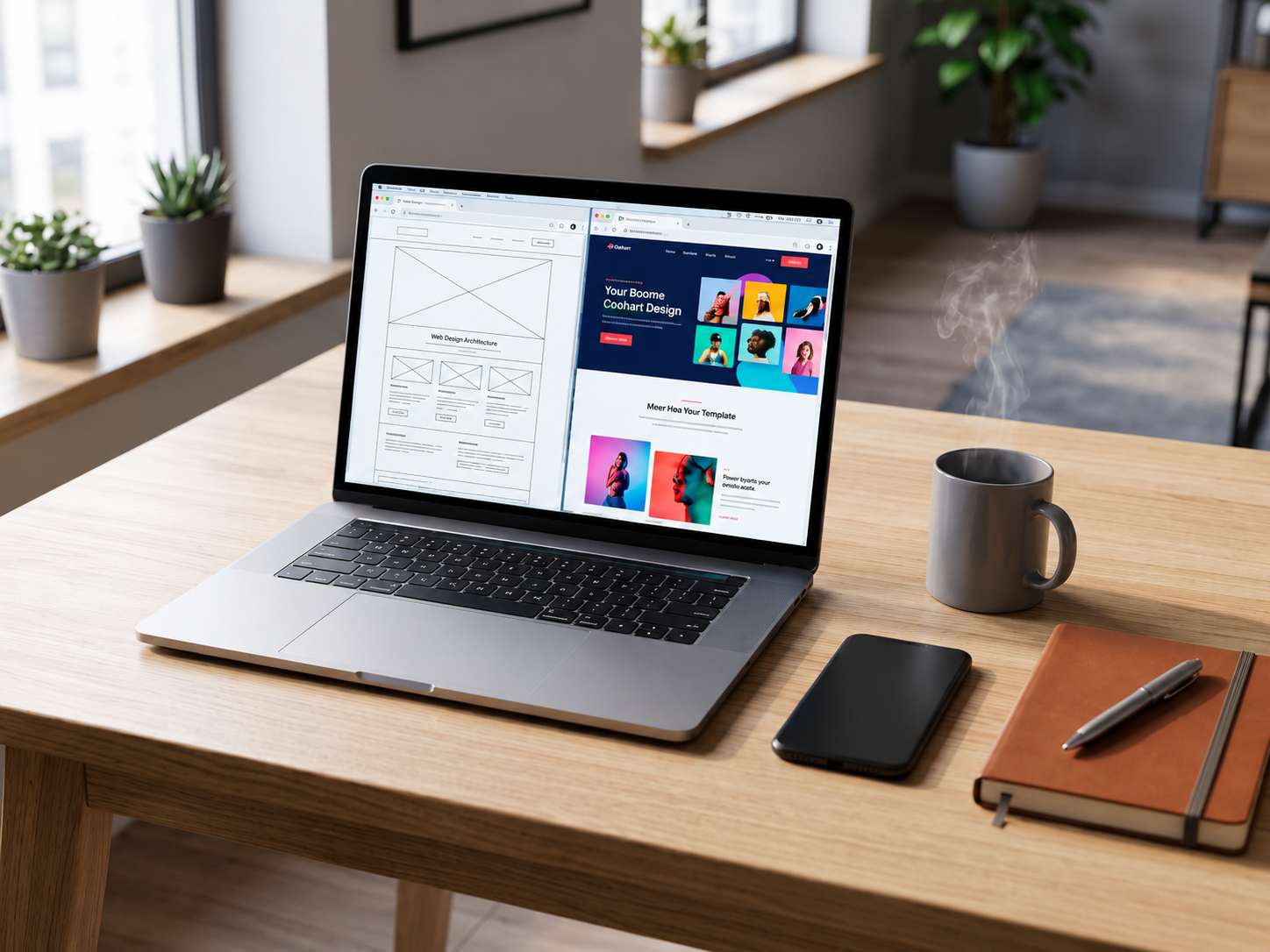
Deciding between a website refresh vs redesign requires a clear look at your current digital performance and future growth targets. Many owners feel their site looks dated, but worry about the downtime of a complete overhaul. A refresh focuses on visual updates and minor tweaks to existing code. A redesign replaces the entire foundation.
No matter which path you choose, we help small businesses determine which path preserves their brand equity. We do this while also fixing conversion bottlenecks. Finding the right balance (between brand equity and conversion rate) ensures your site supports your sales team instead of holding them back.
Mobile responsiveness issues, slow page load speeds exceeding three seconds, and outdated security protocols represent critical technical failures. High bounce rates (i.e., when someone hits the page, then just bounces out) on primary landing pages suggest a disconnect between user intent and current navigation structures. If your existing content management system prevents basic updates or lacks integration with modern CRM tools, a superficial update will not fix the underlying structural debt.
Small business owners often ignore the technical debt until it impacts revenue. If search engines struggle to index your pages or users cannot complete a purchase in under three clicks, these are signs your website needs a redesign. A surface-level coat of paint cannot repair broken checkout flows or non-responsive tables. At Quill, we look at the data to see where users drop off. If the friction exists in the core architecture, we recommend a deeper dive into the site’s backend to ensure long-term stability and performance.
| Category | Indicator | Impact |
|---|---|---|
| Load Time | > 3 Seconds | 40% User Abandonment |
| Mobile | Non-Responsive | Search Ranking Drop |
| Security | HTTP Only | Browser Warning Labels |
| UX | 3+ Click Path | Lower Conversion Rate |
Growing companies often outpace their initial digital footprint. If your business model has shifted from service-based to product-based, or if you have expanded into new geographic regions, your current site structure likely lacks the hierarchy to support these new entities. When to redesign a website depends largely on your three-year scaling plan. A simple refresh might last six months, but a strategic overhaul builds a platform that accommodates thousands of new visitors and complex lead-capture workflows.
Timing is everything in digital marketing. We suggest evaluating your site every two years to check if the technology still matches your ambitions. If your competitors have updated their user interfaces to include AI chatbots or advanced booking systems, your site might feel like a relic. A website redesign for small business allows for the implementation of these high-value features. This process ensures your brand remains competitive in a market where user expectations for speed and ease of use continue to climb every quarter.
Reasons for a new website include:
If your core functionality remains strong but the aesthetic feels stuck in the last decade, a refresh is the logical choice. This approach involves updating typography, refreshing brand colors, and replacing stock photography with high-quality original images. It is a faster route to market that requires less investment than a ground-up build. Small businesses use this to stay current without the stress of a massive migration.
| Tactic | Purpose | Expected Result |
|---|---|---|
| Font Swap | Readability | Lower Bounce Rate |
| Color Palette | Brand Alignment | Better Recognition |
| CTA Buttons | Visual Hierarchy | Higher CTR |
| Hero Images | Modern Aesthetic | Professionalism |
A website refresh checklist keeps the project focused on high-impact visual changes. We start with the header and footer, then move to the primary call-to-action sections. If your site still functions well on mobile and the CMS is easy to use, a website refresh checklist helps you avoid unnecessary expenses. You keep the parts that work and polish the parts that don't. It’s about maximizing the value of your existing digital assets while keeping the user experience fresh and engaging for returning customers.
Budgeting for a digital overhaul requires understanding the difference between hourly development and fixed-scope projects. A website redesign cost for small business varies based on the number of unique page templates and the complexity of data migrations. If you need custom e-commerce functionality or membership portals, the investment will be higher than a standard five-page brochure site. We prioritize features that offer the highest return on investment to keep projects within a manageable range.
Cost should be viewed through the lens of potential revenue gain. If a new site increases your conversion rate by even 1%, it often pays for itself within the first year. A website redesign for small business isn't an expense: it's a sales tool that works 24 hours a day. We help you identify which "nice-to-have" features can wait and which "must-have" items are essential for your launch. This phased approach keeps your website redesign cost for small business aligned with your actual cash flow.
If your site is slow, then users will leave. If your site is fast but ugly, they might not trust you. Success requires a balance of speed, aesthetics, and clear communication. Every website refresh or redesign project should begin with a thorough audit of your Google Search Console data. This reveals exactly which pages are working and where you are losing visibility. We use these insights to guide every design choice, ensuring your new look doesn't hurt your current search rankings.
Choosing the right path is a matter of business goals. If your site is technically sound, a refresh is enough. If the foundation is crumbling, you need to start over. Signs your website needs a redesign are usually obvious in your monthly traffic reports. When you see a steady decline in engagement, it's time to act. We work with you to build a site that reflects your expertise and helps your business grow in a crowded digital marketplace.
How long does a website refresh typically take? A visual refresh usually takes two to four weeks, depending on the number of pages. It involves updating stylesheets, images, and button designs without changing the underlying page structure or database.
Will a redesign hurt my existing search rankings? If handled correctly with 301 redirects and maintained URL structures, a redesign often improves rankings over time. Problems only arise when page addresses change without telling search engines where the new content lives.
How do I know if I can just do a refresh? A trick is to check your mobile performance first. If your site is fast and works perfectly on smartphones but just looks "old," a refresh is appropriate. If it fails mobile tests, a redesign is necessary.
Is it possible to do a redesign in stages? Yes. We often recommend starting with the most critical conversion pages, like the homepage and services pages, before moving to the blog or gallery sections. This helps manage budgets and timelines effectively.
Ready to stop losing leads to a dated website? Whether you need a quick visual boost or a complete structural overhaul, our team at Quill provides the technical expertise to get it done right. We focus on results, not just fluff.
Contact us today to schedule your site audit.
